The letters «SPS» sound the same for a cottage installation and for a station serving an entire residential block — yet the difference between the two is 20-50× in price, capacity and design approach. This confusion is where clients lose money: they buy a domestic unit for a commercial site because «the datasheet says 10 m³/hour», and it dies six months later under real load.
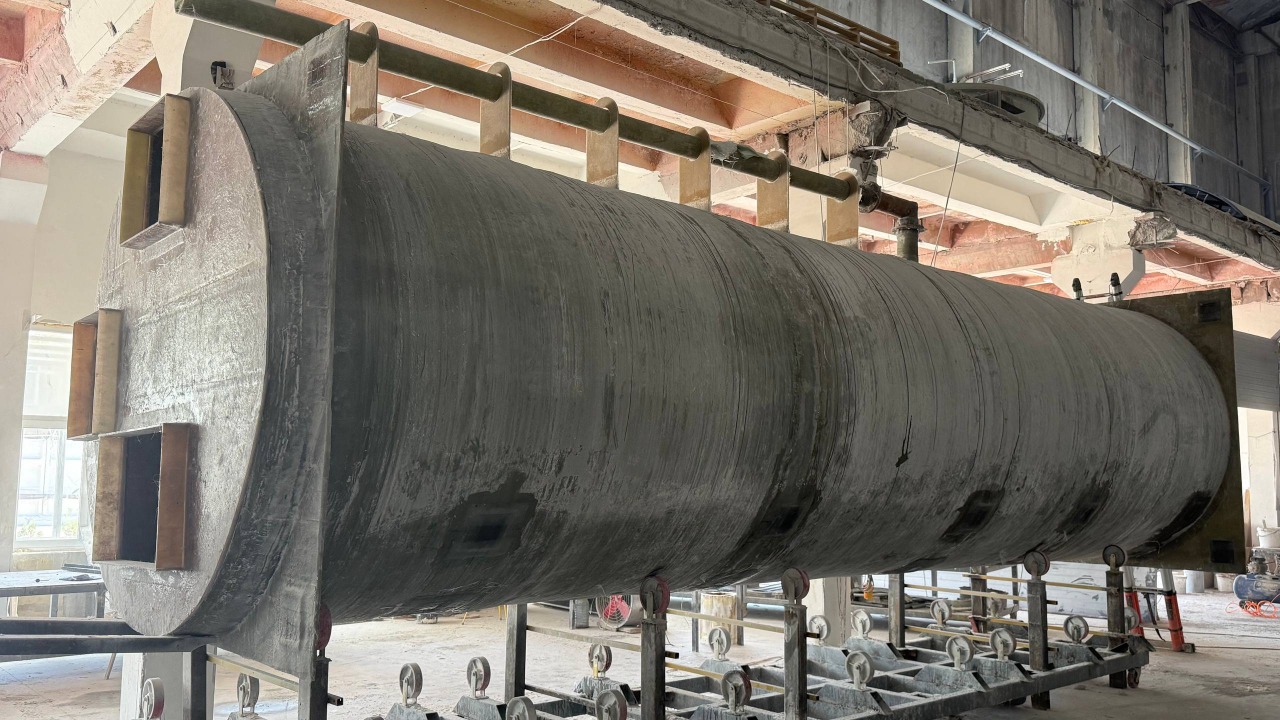
An SPS — Sewage Pumping Station — is a standalone engineering structure with a throughput of 5-100 m³/day and 6-10 metres depth. Two or three pumps (duty + standby + sometimes a second duty), automation with dispatch, control panel with variable-frequency drive, stainless steel piping, a separate valve chamber. Runs 24/7 with peak-load spells throughout the day. Housing — fibreglass or steel (coated for corrosion resistance with external waterproofing). Fibreglass is the most durable option for aggressive soils and high water tables. Steel is faster to manufacture and install, suits stable dry soils, and requires an annual inspection of weld seams and coating. Turnkey price — 80 million to 800 million UZS. Construction takes 2-4 months, maintenance quarterly with a full pump overhaul once a year.
Indicative project cost. The figures above (for both domestic and industrial SPS) are approximate and are provided only for general budgeting purposes. The final cost depends on many factors, including throughput capacity, burial depth, equipment configuration, and site-specific conditions. A precise commercial proposal with detailed pricing is issued only after we review the input data and complete the engineering calculation for the project.
Key differences point by point. Pumps: domestic — one submersible, no standby (fails and the water sits, call a crew), industrial — at least two with automatic failover. Automation: domestic — float and relay, industrial — controller with GSM module texting alerts on any fault, integration with a dispatch centre. Housing: domestic is rated for 15-20 years in benign conditions, industrial for 30-50 years with annual crack and corrosion inspections. Electrics: domestic runs on 220 V, industrial needs 380 V with a dedicated feed and RCD.
The most common ordering mistakes. First — putting a domestic SPS on a commercial site (café, car wash, small production shop) because «peak is 4 m³/hour, the 5 on the datasheet will cover it». Three months later the pump burns out running 18 hours a day instead of the intended 3-4. Second — ordering an industrial SPS for a private house «just in case». That is a 5-8× overspend plus dispatch automation that sits unused. Third — ordering an SPS made of bare steel with no corrosion coating and no external waterproofing for aggressive effluent (galvanic, car wash) — the tank turns into a sieve in 2-3 years. The right call is either fibreglass, or steel with reinforced corrosion protection and quality external waterproofing.
How to pick correctly. First question — the object type and effluent character. Residential space with up to 10 m³/day of domestic effluent — domestic SPS. Commercial, industrial, multi-family — industrial from day one. Second question — how critical is uninterrupted operation. A restaurant, car wash or supermarket stops the moment the SPS fails — that means an industrial unit with a standby pump. Third question — the medium. If the effluent carries fats, surfactants or acids — mandatory stainless steel or polyethylene, no plain steel.
What has to be in the contract, always. Pump warranty of 24 months (not the 12 they will try to sell you). Pipework with a non-return valve and isolation valve — mandatory, otherwise a pump service floods the space. A service contract with a fixed annual fee — locked in as a separate annex, so you do not face a 3× price hike a year later. And one line that usually gets skipped: the standby-power plan. An industrial SPS on a power cut needs either a 6-12 hour battery backup or a diesel generator in the panel room — otherwise the first scheduled outage becomes a basement flooding incident.


Scan the QR code to go to our Telegram channel


 92, Navoi st., Chirchik city, Republic of Uzbekistan
 +998 55 900 17 00
 info@tehmash.uz